Crew, the rum here starts as sugarcane you can touch on the way in. After sailing down from Annapolis to the BVI, we visited Callwood Distillery in November 2026. We walked it start to finish: the cane field, an old iron press, a black pot still, and a five-rum tasting at a bar covered in dollar bills. By the end, I had a favorite.
Watch the Full Callwood Distillery Tour
What Callwood Distillery Is
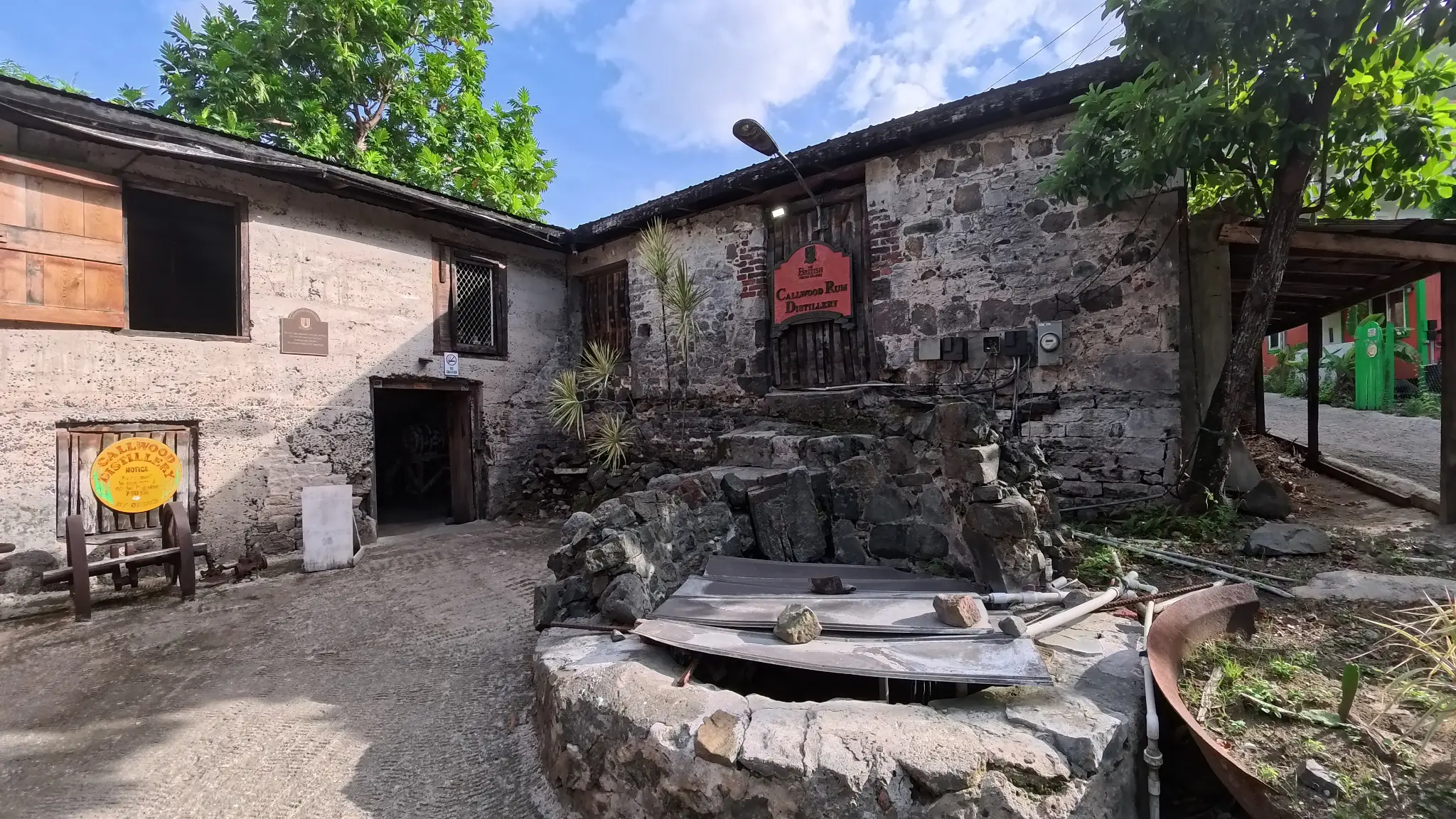
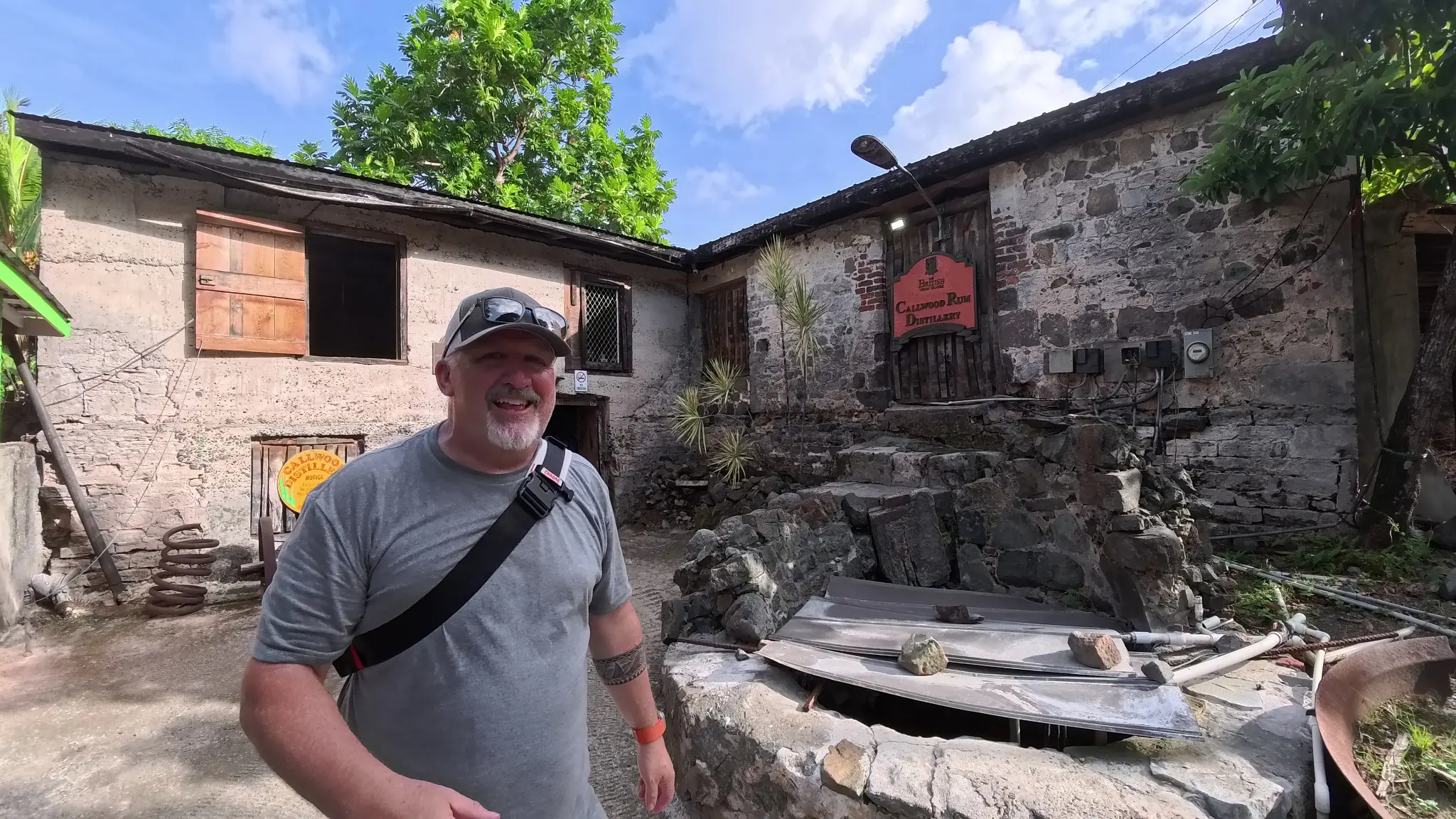
Callwood is a working family distillery on Tortola’s north shore. Its website traces distilling here back more than 200 years and calls it the Caribbean’s oldest continuously operating pot distillery. The family’s own history dates Richard Callwood’s purchase of the Arundel Estate to the late 1800s and describes a fourth-generation operation. That’s where the Arundel name on the bottles comes in.
It’s a survivor, too. The family’s history counts 106 distilleries across the BVI in the 18th and early 19th centuries, including 26 on Tortola, and says Callwood is the remaining operation. BVI Tourism lists it as a historic site, noting the original boiler and casks. This isn’t a polished visitor center. It’s old equipment, stone walls, and someone who knows how it all works.
The big difference is the starting ingredient: fresh-pressed sugarcane juice, not molasses. Callwood says its cane comes from Cane Garden Bay land and describes small-scale production of about 25 gallons of rum a day during production.
The Tour, Step by Step
It’s a short walk-through. Reviewers generally put the tour at about 15–20 minutes, plus time for tasting and shopping. Our guide told us he’d been doing this for 25 years. He had plenty to say, and we were happy to listen.
1. The cane field
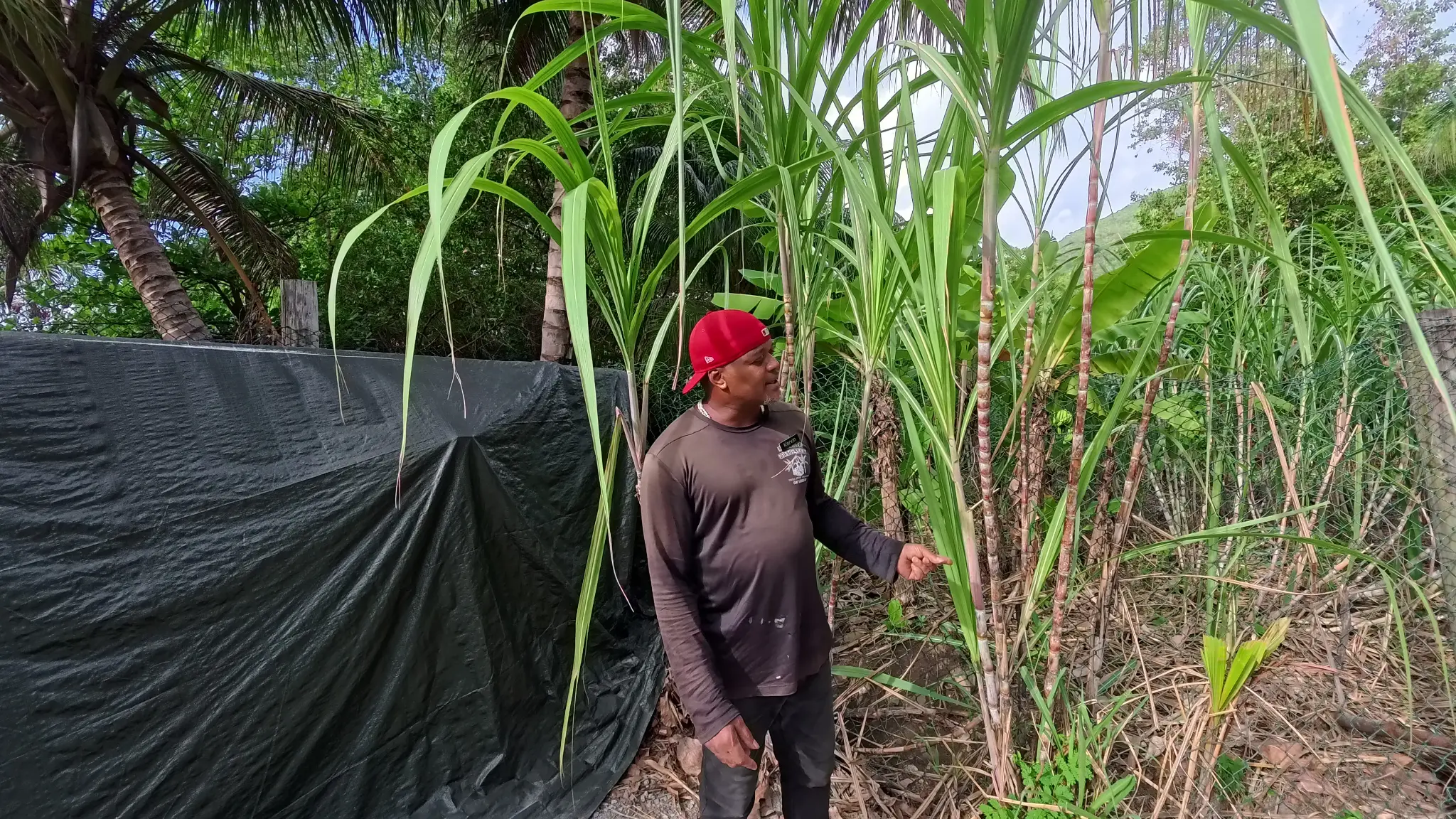
First stop: the cane growing behind the distillery. Peel a stalk and the juice is sweet. The leaves are sharp, though. Our guide explained that Callwood doesn’t burn the fields before harvesting; the cane is cut by hand with a machete. He put rum-making season at roughly March through August. We were there in November, so the crusher wasn’t running.
2. The crusher and the old diesel
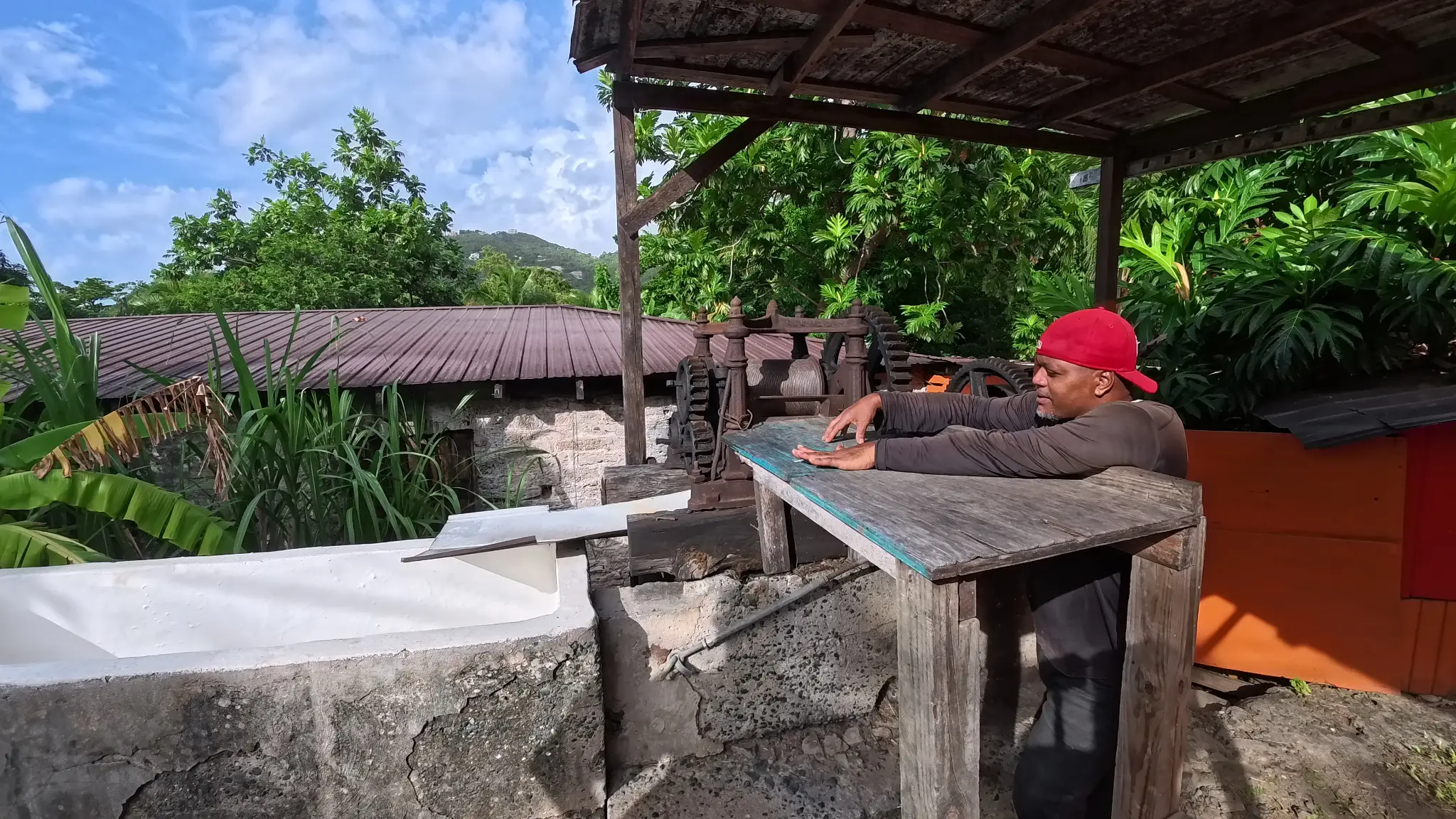
Out back is the old iron press. Our guide walked us through its history: animals first, then steam, and eventually a diesel engine belted to the press. He called the press about 200 years old. One stalk goes through at a time, with the juice running into a tub before it’s piped back inside.
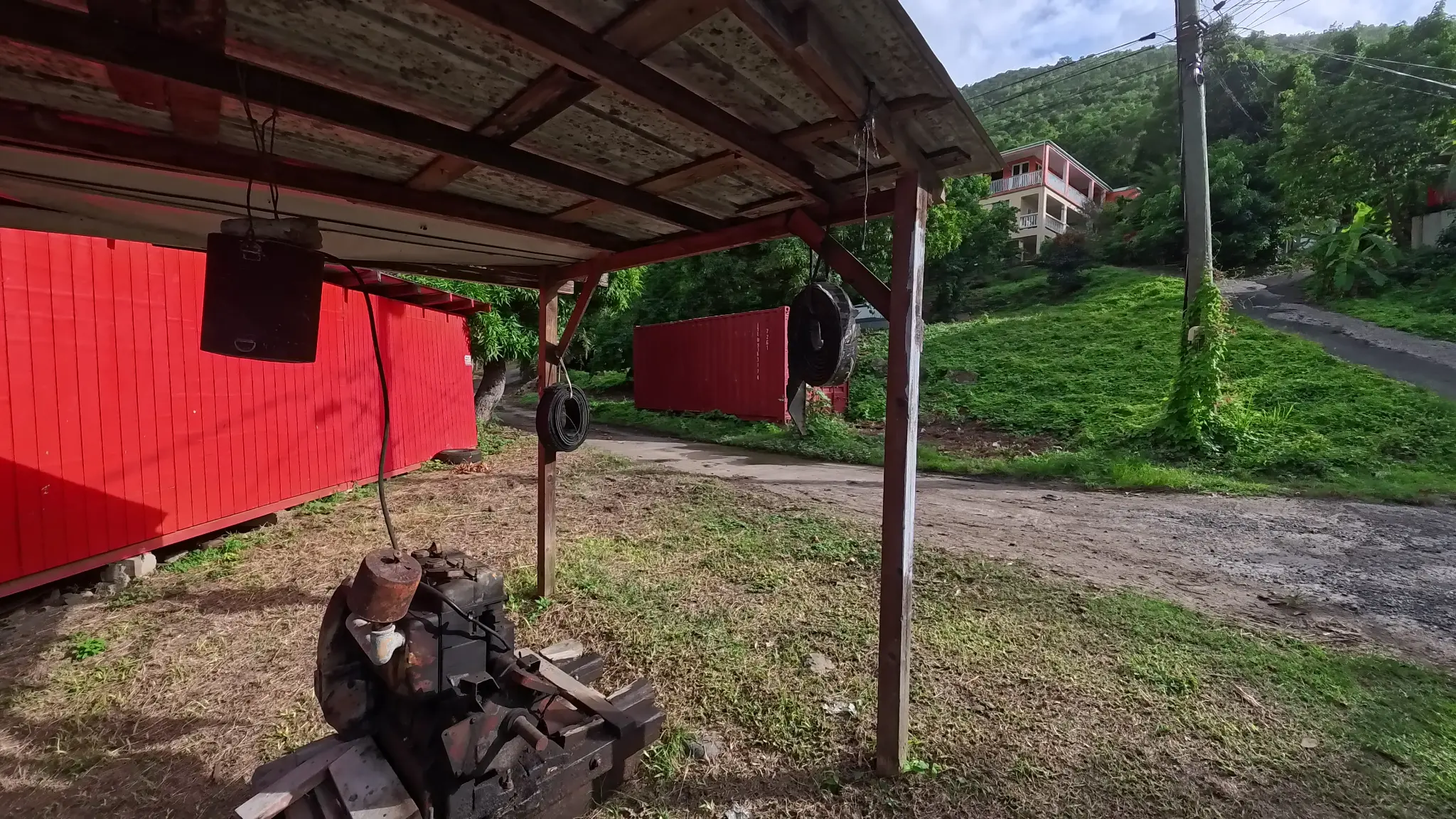
The diesel sits under its own open-sided shed, connected to the press by a belt. Our guide put its age at more than 80 years. We didn’t see it running that day, but looking at the engine and flywheel was a pretty good reminder of how much of this place still does things the old way.
3. Bagasse, the boiler, and the eight-day ferment
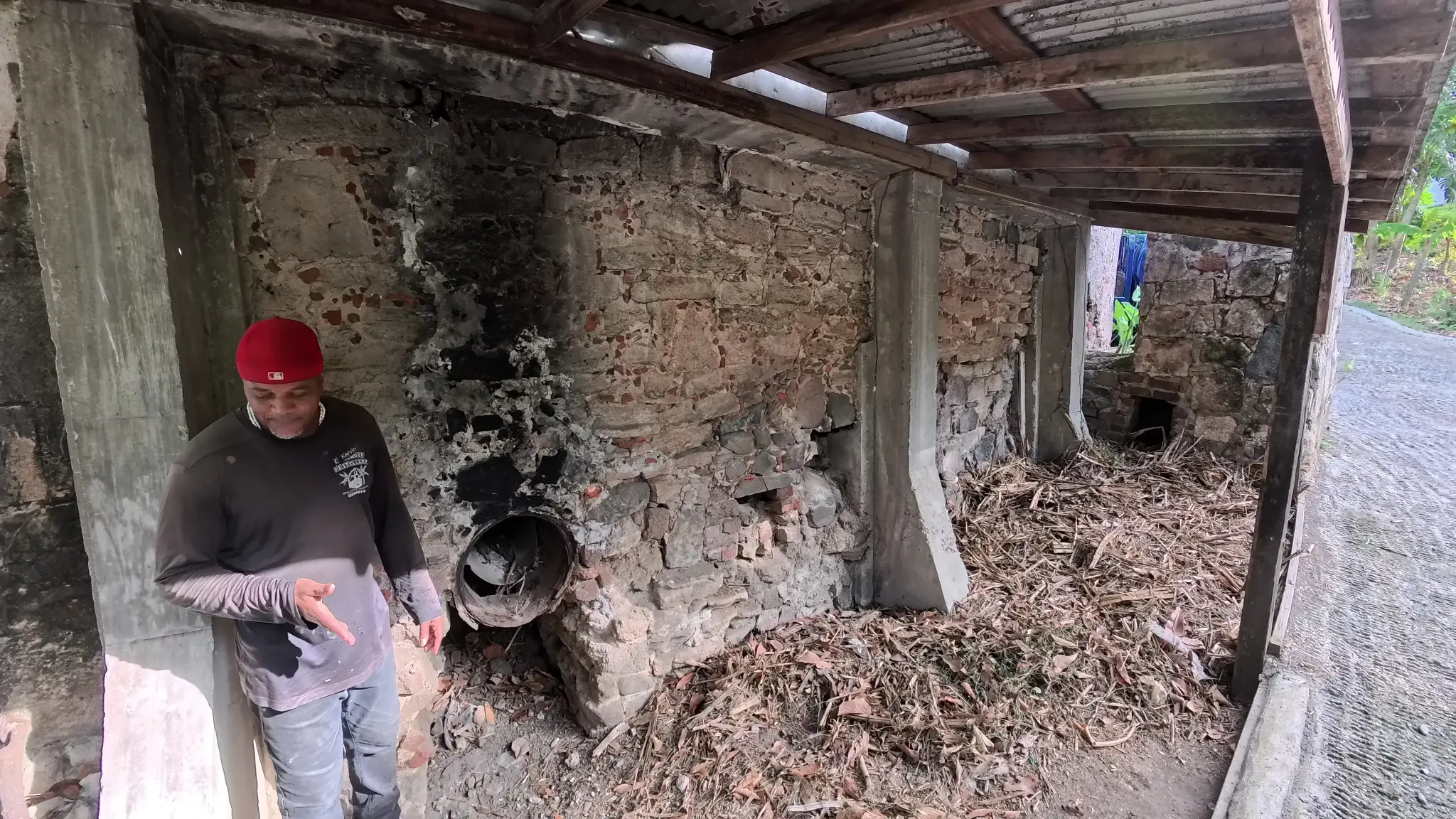
The crushed cane fiber is called bagasse. Our guide explained that they dry it, store it under a shed, and burn it beneath the boiler. It’s fuel, not waste. Heat travels under the pots, with the smoke heading up the chimney. He said the juice cooks for about three hours.
Then comes fermentation. According to our guide, they don’t add yeast; the juice ferments naturally for about eight days, reaching roughly 10% alcohol before it goes to the still. Those were his numbers from the walk-through, not measurements we took ourselves.
4. The pot still
The pot still is black, old, and still part of the operation. Our guide described vapor passing through a water-cooled coil and coming off at around 150 proof. Water brings that down to the 80 proof—40% alcohol—you see on the bottles. Callwood’s website also lists its rum at 80 proof.
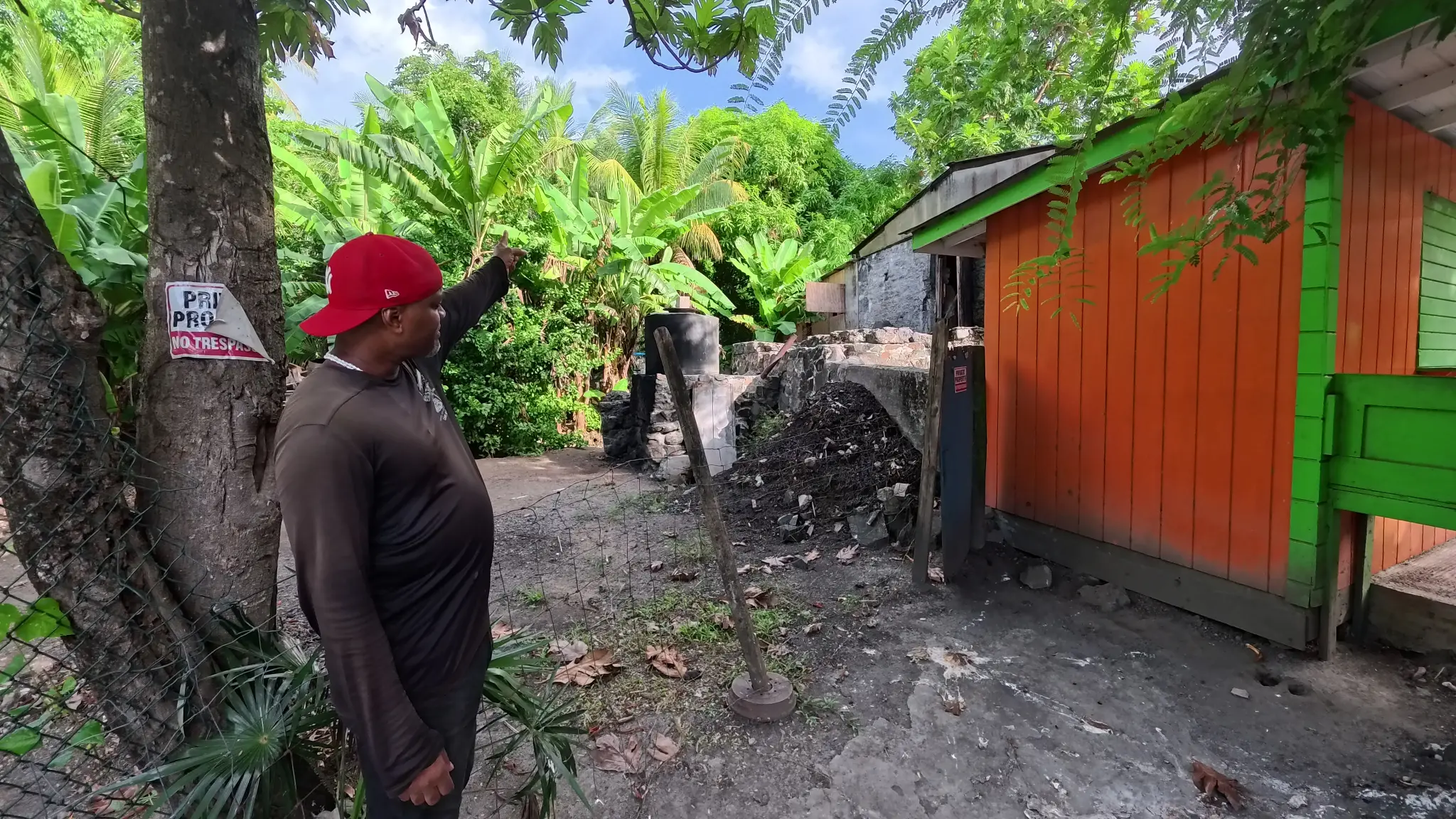
5. The well
The stone well out front got its own stop. Our guide said it’s about 20 feet deep, has never run dry, and once supplied the houses around it. There’s also an old cooling coil and a water pump from the steam days on display. Even the things you might walk past have a story here.
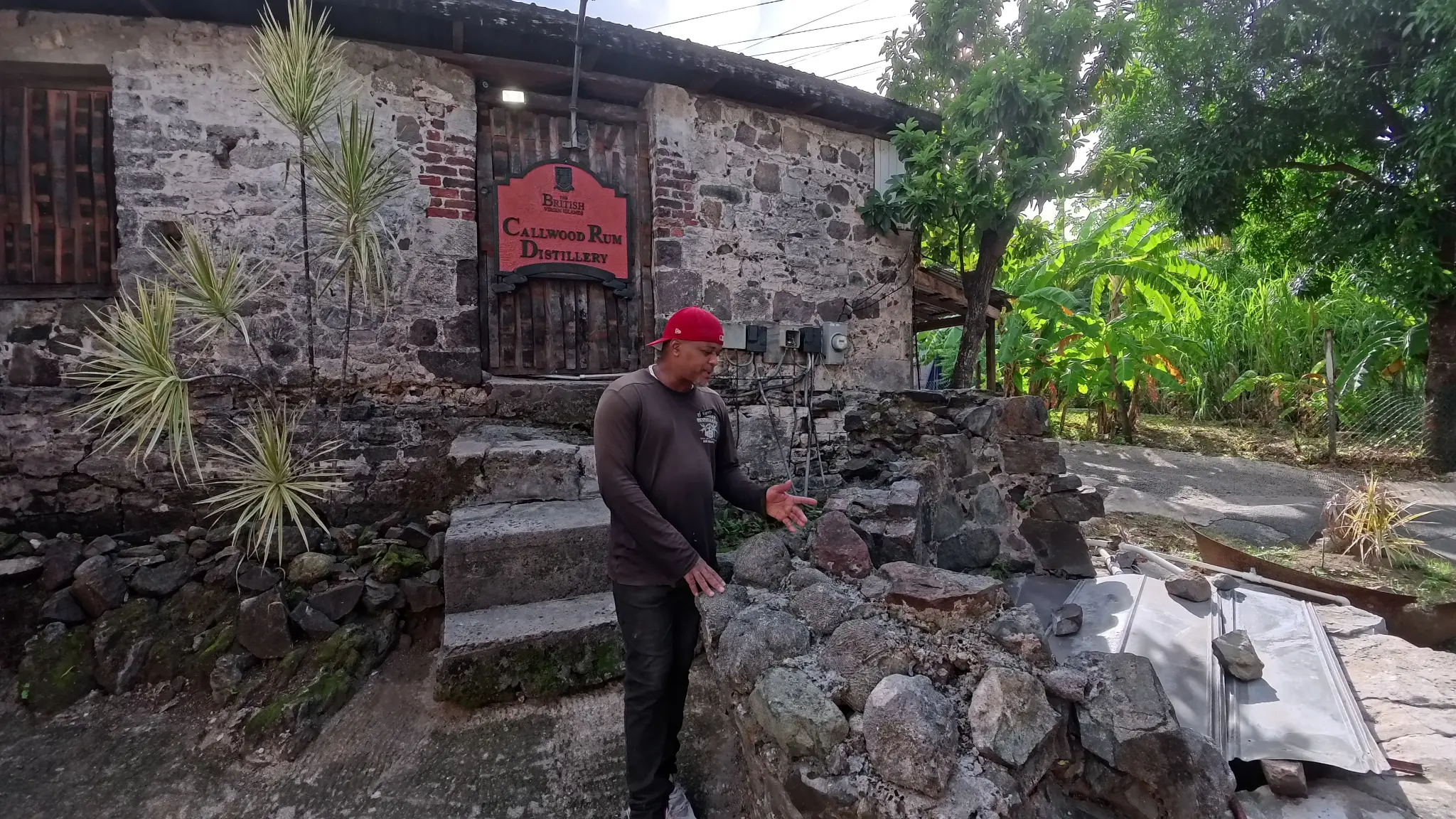
6. The dollar-bill bar and the tasting
Inside, signed dollar bills cover the bar, Arundel bottles line the shelves, and there’s a framed photo of the old animal-driven crusher. Our guide pointed out glass demijohns holding the stronger spirit and said the aged rum rests in charred oak barrels from Kentucky.
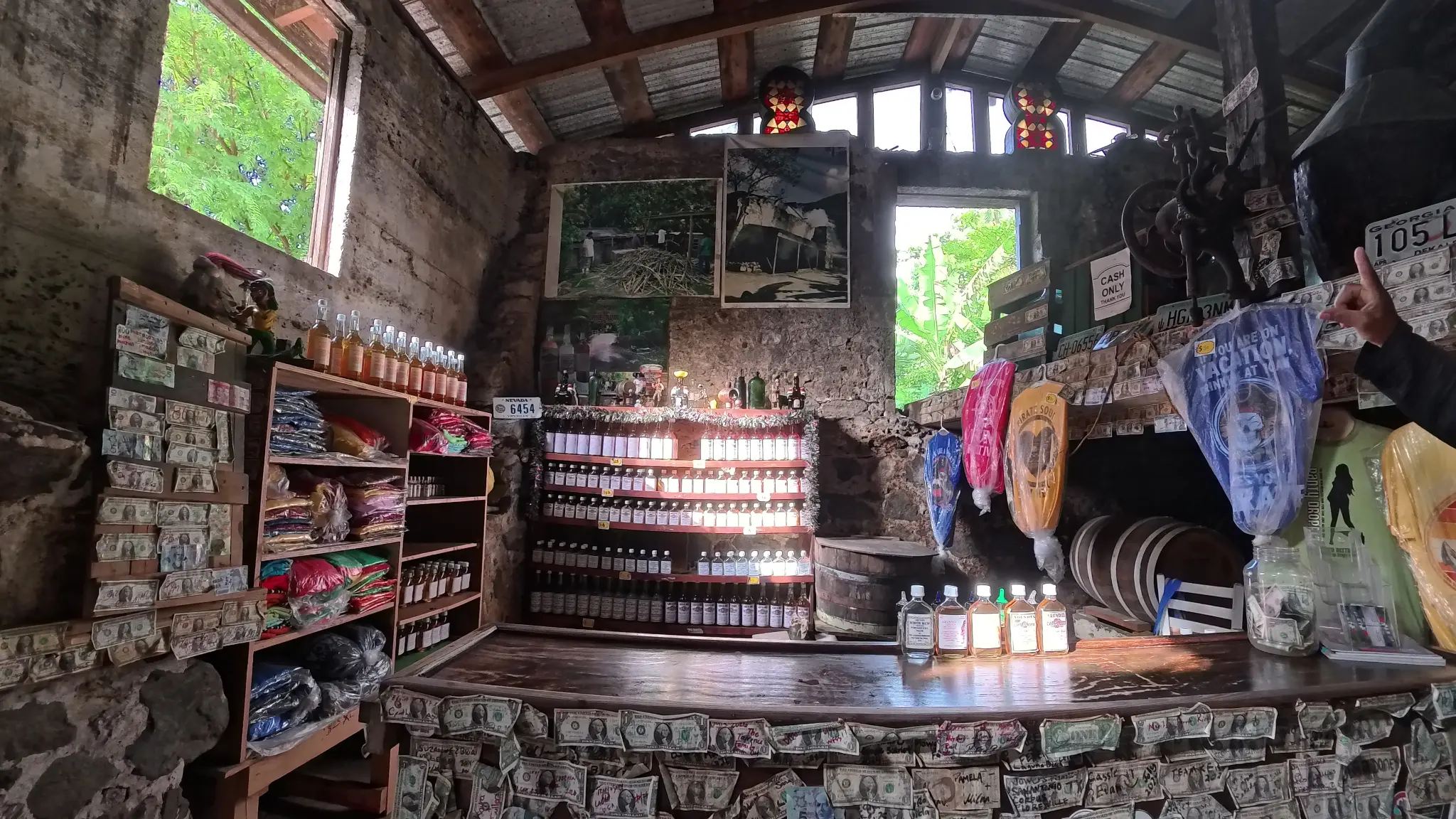
We tasted five rums. The four-year aged rum was the one our guide suggested for mixing with juice or making daiquiris and piña coladas. The ten-year was smooth and made more sense to me as a slow sip. It was my favorite of the five, and our guide’s pick too.
The “Ladies” rum was sweetened with cane, a good option if straight rum isn’t your thing. The “Man” rum was a house infusion with its own reputation. Ask at the bar. Then came the unaged white, which our guide saved for last. That one got my attention.
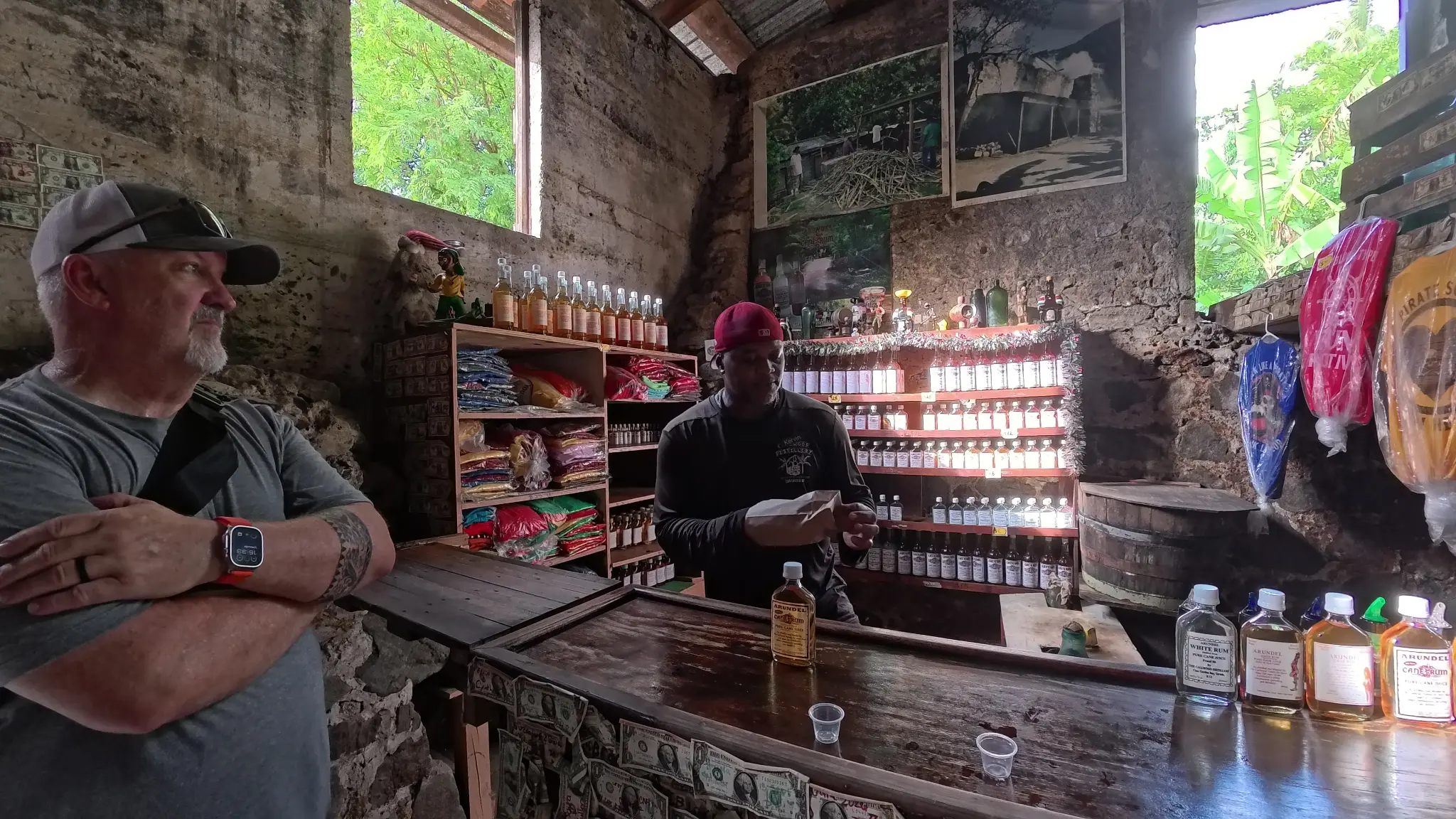
On November 4, our guide quoted $6 and $12 for small bottles and $25 for the large. That’s what we heard on our visit, not a current price list or a price for every variety. I bought the small ten-year. Easy call.
Callwood uses the phrase “No Hangover Rum” in its marketing. That’s a slogan, not a guarantee. Fresh cane juice doesn’t make alcohol hangover-proof, and rum can still leave you feeling rough the next day. Enjoy the tasting, pace yourself, and don’t make it the warm-up for driving or taking the helm.
Know Before You Go
- Cash only. The sign inside is clear. Bring small US bills for tasting and bottles; the BVI uses US dollars.
- Ask before taking photos inside. On our visit, the handwritten sign said no inside pictures before buying a bottle, or pictures were $2. Buy a bottle first or check with the staff about the fee.
- Check the hours. The official contact page lists Monday–Friday, 8 a.m.–5 p.m., and Saturday, 10 a.m.–5 p.m. Sunday opening is occasional when a cruise ship is in port, not guaranteed. The distillery lists September as closed. Confirm before making the trip.
- Getting there. Tell the taxi driver Cane Garden Bay, the distillery. It’s just across the road from the beach. Allow roughly 20–25 minutes from Road Town by taxi, depending on traffic and where you start.
- Leave a little extra time. The walk-through is short, but tasting, questions, and picking a bottle add to it. Cruise days can be busier; a quieter day or later afternoon may suit you better.
- Working machinery is seasonal. Our guide described March–August as rum-making season. We toured and tasted in November with the equipment idle. Ask what’s operating if that’s important to your visit.
For a question about visiting, use the official page above or email CallwoodDistillery@gmail.com.
What Other Visitors Say
When we checked TripAdvisor on November 21, 2026, Callwood had a 4.0 out of 5 from 285 reviews and ranked eighth of 42 things to do in Tortola. Those numbers can change, but the comments give a pretty fair picture of the place.
Some visitors call it run-down; others say the rustic building and old equipment are exactly why it’s worth stopping. The quick walk-through and tasting get plenty of praise. Cash-only payment and the indoor-photo policy catch some people off guard. Know those two things before you go and you’re less likely to be annoyed at the door.
One reviewer suggested asking to taste the white rum first. After our lineup, I can see the argument—the white hits hard after the aged rums. Don’t expect every visit to have the same order or exactly the same bottles available.
Doing Callwood on a BVI Yacht Charter
If you’re chartering out of Tortola, this can fit into a half-day ashore. We’d just finished our delivery, so it was a good change of pace. You can taxi over before boarding, or visit by boat when conditions allow.
Here are Tortola charter bases and their official operator links to help with planning. This is a directory, not a review of every company; check your own booking for the current departure marina.
- The Moorings — Wickhams Cay II, Road Town
- Sunsail — Wickhams Cay II, Road Town
- Horizon Yacht Charters — Nanny Cay Marina
- Dream Yacht — Hodges Creek Marina
- BVI Yacht Charters — Ritter Marina, Wickhams Cay 2, Road Town
- Voyage Charters — Soper’s Hole
- Conch Charters — Fort Burt Marina, Road Town
- MarineMax Vacations — Nanny Cay
- TMM Yacht Charters — Road Reef Marina, Road Town
Anchoring or Mooring in Cane Garden Bay
BoatyBall lists Cane Garden Bay among its reservable mooring fields, with daily reservations opening at 7 a.m. local time. Check the current membership and reservation requirements before relying on it. Not every overnight mooring in the bay belongs to that system.
The Online Cruising Guide suggests arriving by 3 p.m. because the bay fills up and notes sand anchoring areas toward the south and southwest. That guide is not for navigation. Use current charts, follow your charter briefing, avoid reefs and shoals, and don’t assume there will be space or good holding wherever you drop the hook.
Keep National Parks Trust day-use buoys separate in your planning. They’re not overnight moorings: overnight use is illegal, and the Trust’s rules include a permit requirement and a 90-minute limit. Identify the operator and purpose of a buoy rather than guessing by color.
When the bay is suitable, take the dinghy to the dock. Callwood is a short walk ashore, just across the road from the beach. Otherwise, make it a taxi stop from a more sheltered base.
Gear I Used
This was a walk-around filming day. Here’s the camera gear, support kit, and bag I used for the tour—not a new gear review, just the kit behind the article and video.
These are Amazon affiliate links. We may earn a commission from purchases at no extra cost to you. As an Amazon Associate, What Where Who earns from qualifying purchases.
- Insta360 X6 Essentials BundleBuy on Amazon →
- Insta360 Ace Pro 2 Dual Battery Xplorer BundleBuy on Amazon →
- Insta360 Extended Invisible Selfie StickBuy on Amazon →
- iFootage Cobra 3 Base mini tripod (CB3 BASE)Buy on Amazon →
- Chrome Industries Kadet Max messenger bagBuy on Amazon →
Callwood Distillery FAQ
- How long is the Callwood Distillery tour?
- Allow about 15–20 minutes for the walk-through, based on visitor reports, plus time for tasting, questions, and shopping.
- Is Callwood Distillery cash only?
- Yes. Bring small US bills. On our visit, the sign also requested buying a bottle before taking inside photos or paying a $2 photo fee; check with staff.
- What are Callwood Distillery’s hours?
- The official page lists Monday–Friday, 8 a.m.–5 p.m., and Saturday, 10 a.m.–5 p.m. Sundays are occasional cruise-ship openings, and September is listed as closed. Check current hours before you go.
- What is Callwood rum made from?
- Fresh-pressed sugarcane juice rather than molasses. Callwood says its cane comes from Cane Garden Bay; our guide described natural fermentation and a pot still. The bottles carry the Arundel name.
- How do I get to Callwood Distillery?
- Ask a taxi driver for Callwood in Cane Garden Bay. It’s across the road from the beach. Roughly 20–25 minutes from Road Town is a planning estimate, not a guaranteed journey time.
- Can I visit during a BVI yacht charter?
- Yes. Taxi from your Tortola base, or come ashore from Cane Garden Bay when forecasts and your charter briefing support it. Avoid the exposed bay during north swell.
My Pick: The Small Ten-Year Bottle
We came for a look at how the rum gets made and left knowing a little more about the place, with a bottle I actually wanted to drink. Old stone walls, a guide who knew his equipment, and a tasting that settled the decision. The small ten-year was the one for me.
Want to check out the gear we use for our adventures and videos? You’ll find it in the Gear We Use section of our shop.
Gear We Use →