Some trips start at the airport. This one started on a dock in Annapolis the day after the boat show, with a rigging check, a cold beer, and a long list of things I didn't know yet.
I had the chance to help deliver a brand-new Moorings 5200 from the Chesapeake to the British Virgin Islands. Not a charter vacation. A delivery. There were weather windows to wait for, night watches to stand, and plenty to learn along the way. It turned out to be one heck of a trip.
Staying Behind After the Annapolis Sailboat Show
The Annapolis Sailboat Show wrapped up on Sunday, October 18, 2026. Most people packed up and headed home. I stayed behind.
On Monday, October 19, I helped the captain from Leopard move the Leopard 43 and check her standing rigging—the wires and fittings that support the mast. She's the smallest model in Leopard's current sailing range and the next evolution of the Leopard 42, built by Robertson & Caine. At 42 feet 7 inches long with a 23-foot beam, she still isn't what I'd call a small boat.
The captain walked me through the shrouds and fittings, explaining what we were looking for and why it mattered. Checking a rig on a boat that new is a good way to start learning how it all goes together. Then I went to meet the boat I'd be helping deliver.
Meet the Boat: The Moorings 5200
She was waiting at Port Annapolis Marina on Back Creek. The marina has more than 250 slips, including catamaran slips, plus a pool, laundry, showers, and bridge-free access to the Chesapeake. A good place to get a boat ready to go offshore.
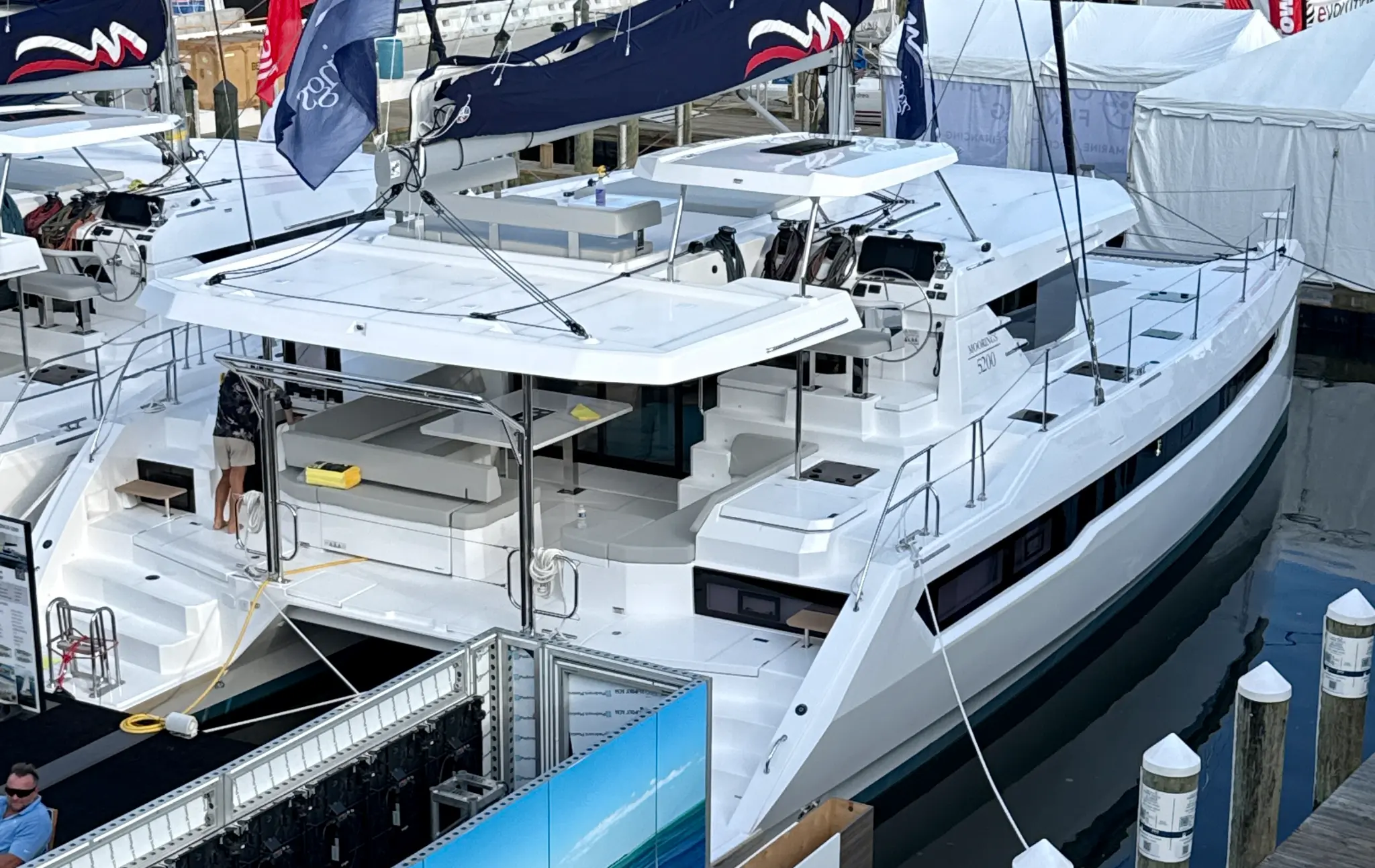
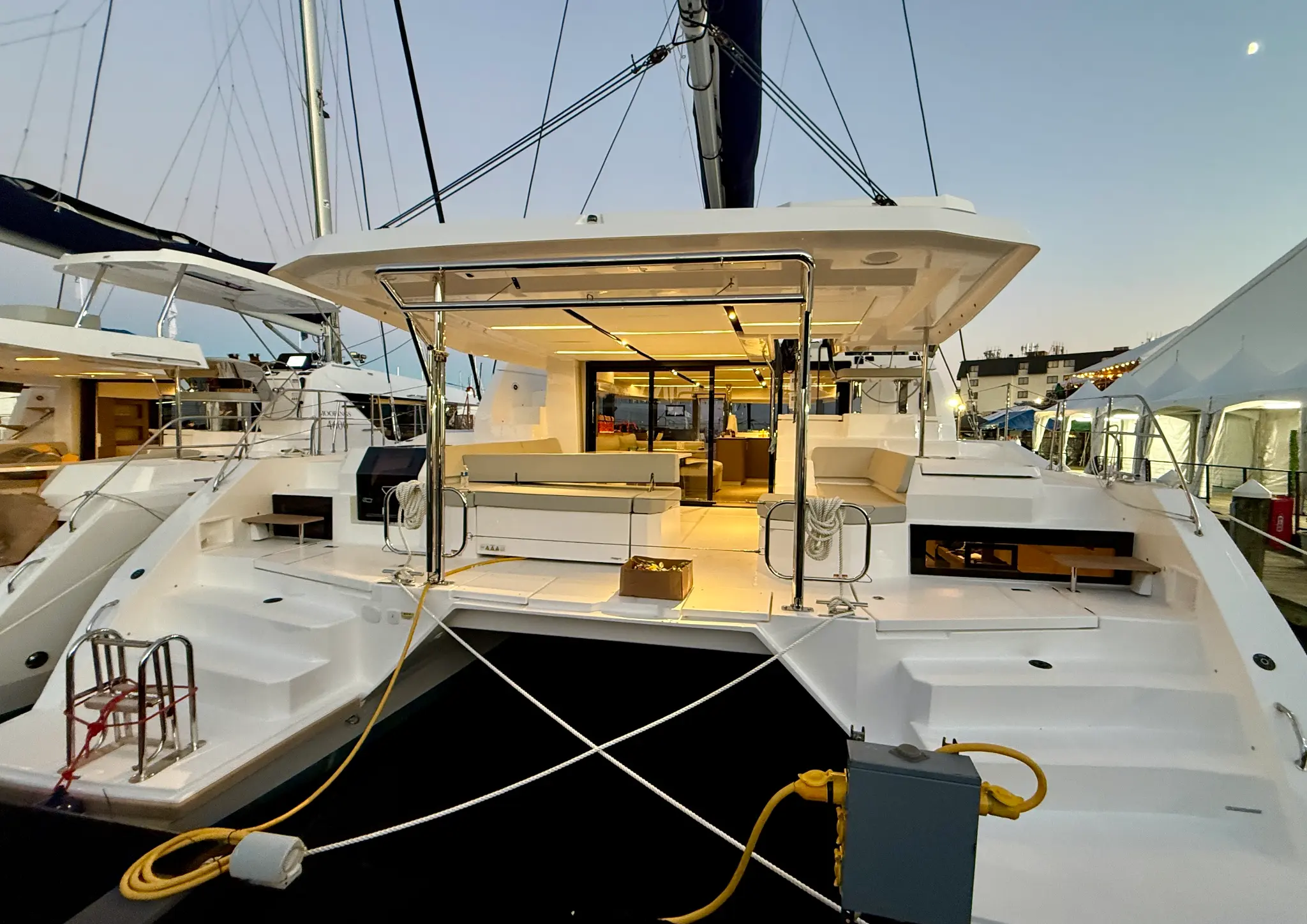
Our boat was a Moorings 5200, The Moorings' charter version of the Leopard 52. The published specifications put her at 51 feet 8 inches long, with a 26-foot-9-inch beam and twin 57-hp Yanmars. The five-cabin charter layout includes four double cabins with en-suite heads and separate showers, a fifth bunk cabin, and a forepeak crew berth.
Ours had a watermaker. She was so new she didn't even have a name yet, so we called her C2024.
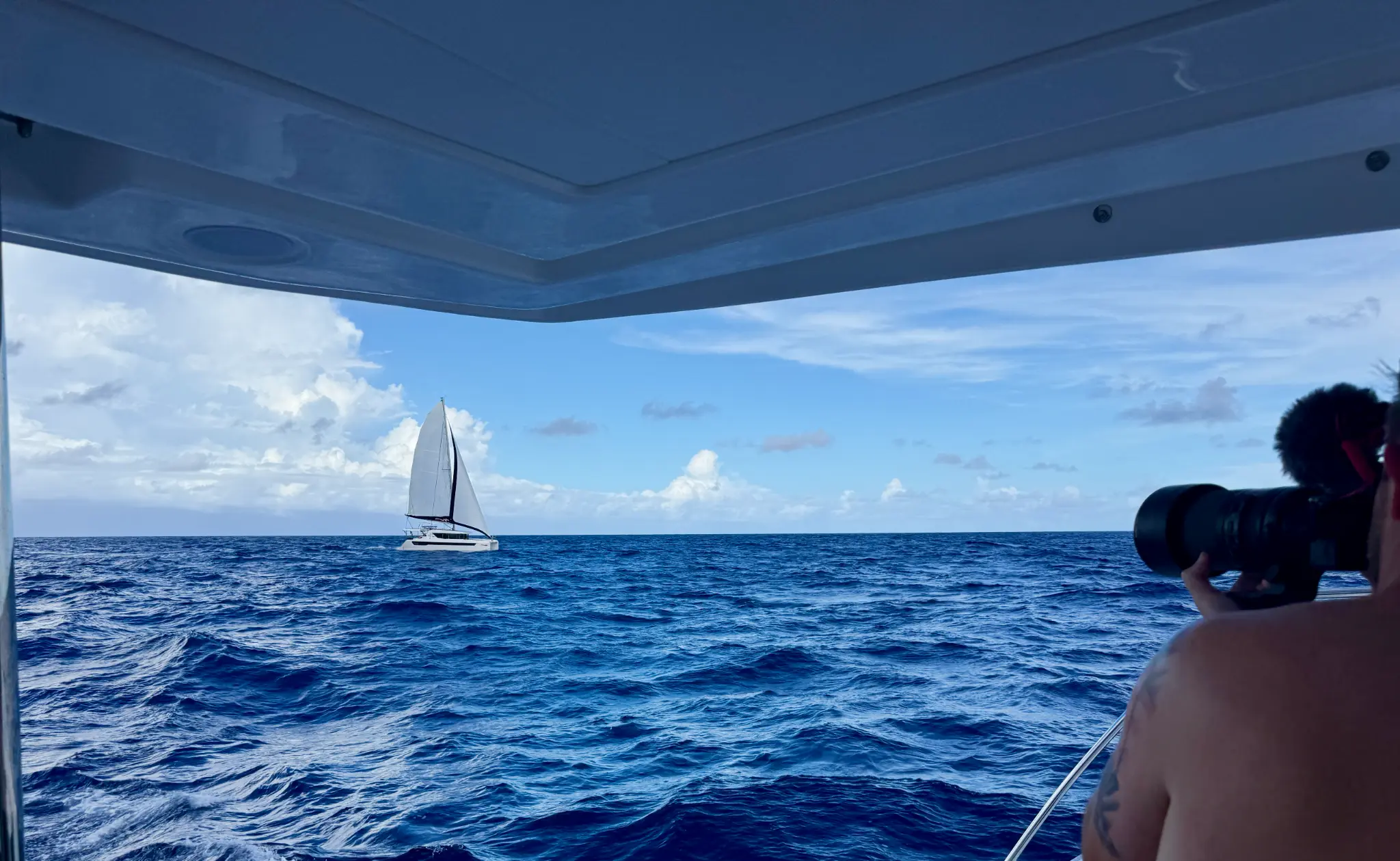
We weren't heading south alone. Our buddy boat was a Moorings 4600, the charter version of the Leopard 46. She's 45 feet 7 inches long, and just like ours, she was brand new and still waiting on a name.
Davis' Pub by Water Taxi
On our one night in Annapolis, we took the Annapolis Water Taxi across Back Creek to Davis' Pub in Eastport with the crew from the 4600.
Davis' sits at 4th and Chester Avenue, and Watermark's taxi map lists a stop called “4th Street (Davis' Pub).” We had a few beers and some food, swapped stories with the other crew, and started to feel like a little two-boat fleet. Nothing fancy. Exactly what you want the night before heading out.
An Overnight Sail to Norfolk
After a night at Port Annapolis, we headed down the Bay for an overnight run to Norfolk. We tied up at Norfolk Yacht & Country Club and settled in to wait for a weather window to go offshore.
The club sits on the Lafayette River near the Hampton Boulevard bridge. The Dock House has a little lounge on the water with coffee, a shower, and restrooms. The docks have shore power, fuel service, and pump-out facilities. The clubhouse's dining options include The Deck and 36° North. We enjoyed the food and the facilities, and the staff took good care of us.
One practical note if you're planning your own stop: this is a private club, not an unrestricted public marina. Visiting arrangements are reciprocal, subject to approval and available slips, so talk to the Harbormaster before showing up.
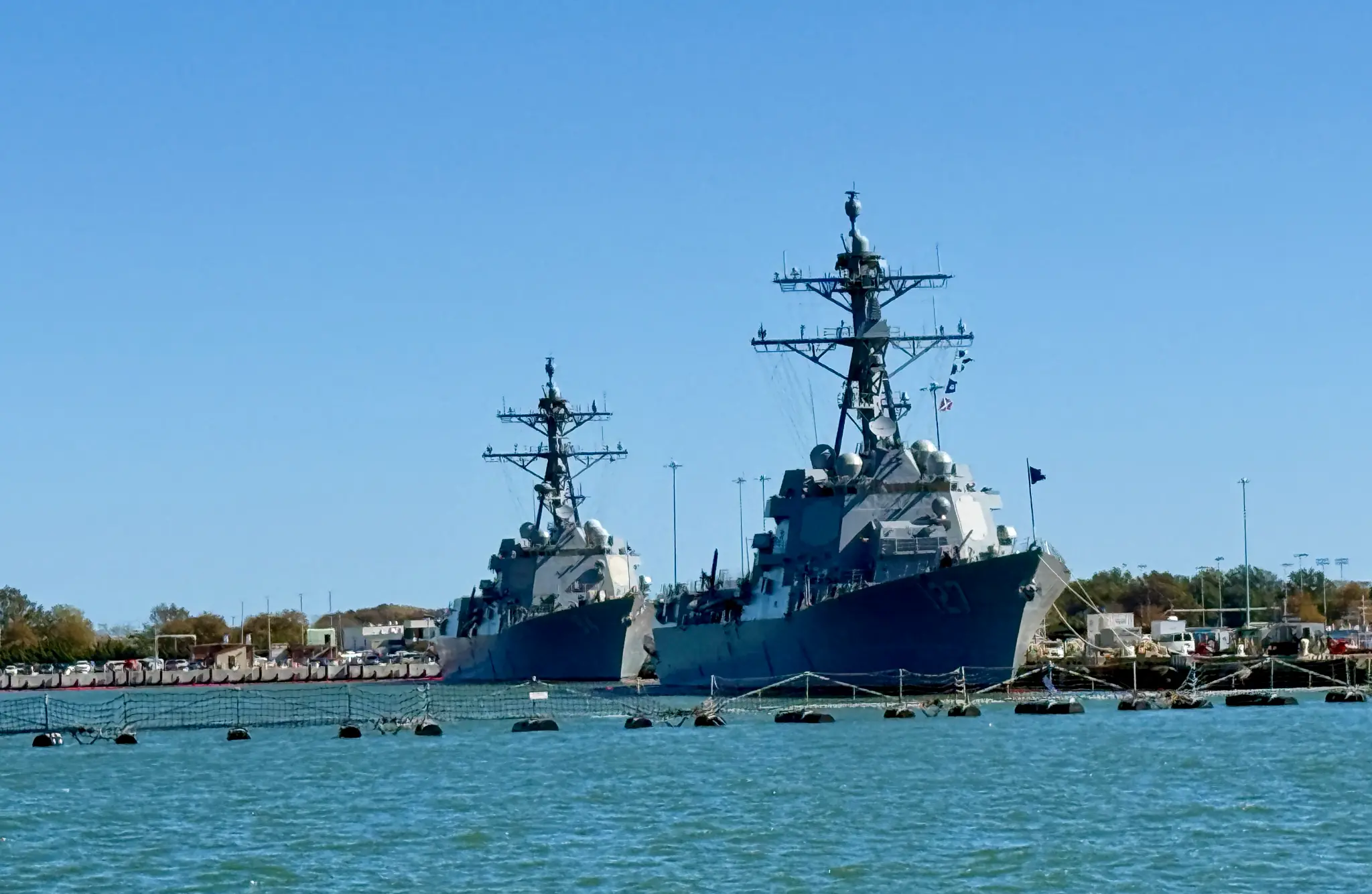
Coming into Norfolk is something I won't forget. You pass Naval Station Norfolk, which the Navy calls the largest naval complex in the world. Seeing those ships from the deck of a sailboat puts a lot in perspective. Their crews leave families behind and spend months away doing a job most of us never see up close.
God bless our troops and everyone who serves. Thank you.
Three Days Waiting on Weather
We spent three days in Norfolk waiting for the right window. Waiting is part of the job on a delivery, and this was a good place to do it.
We did laundry, topped off provisions, and got the boats ready. Every night we traded off cooking crew dinner with the buddy boat. One night they hosted; the next night we did. It's a simple thing, but by the time we left, two crews had turned into one.
Offshore: Four Rough Days, Then a Different Trip
We left Norfolk on Sunday afternoon, October 25, and headed for Tortola. By the time we tied up there, my delivery log from Annapolis came to 1,553 nautical miles. That's the distance we actually traveled, not a straight line drawn between the start and finish.
The first four days were rough. The sea state was big and confused, and the boat was moving a lot. My cabin was a forward berth, and up in the bow every wave lifted me off the mattress and dropped me back down.
Sleep wasn't happening up there, so I moved to the saloon and the cockpit. You feel the motion less, and you're closer to the helm if you're needed. When you're tired enough, a cockpit cushion feels like a five-star bed.
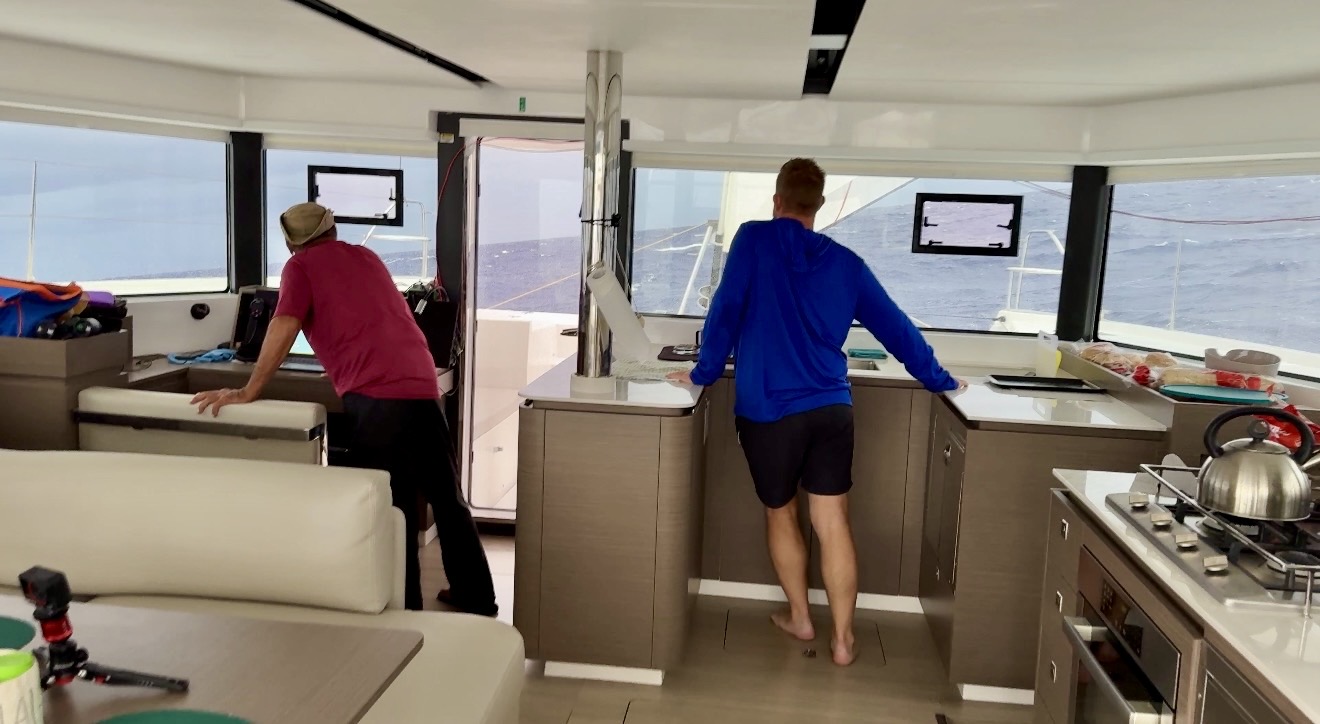
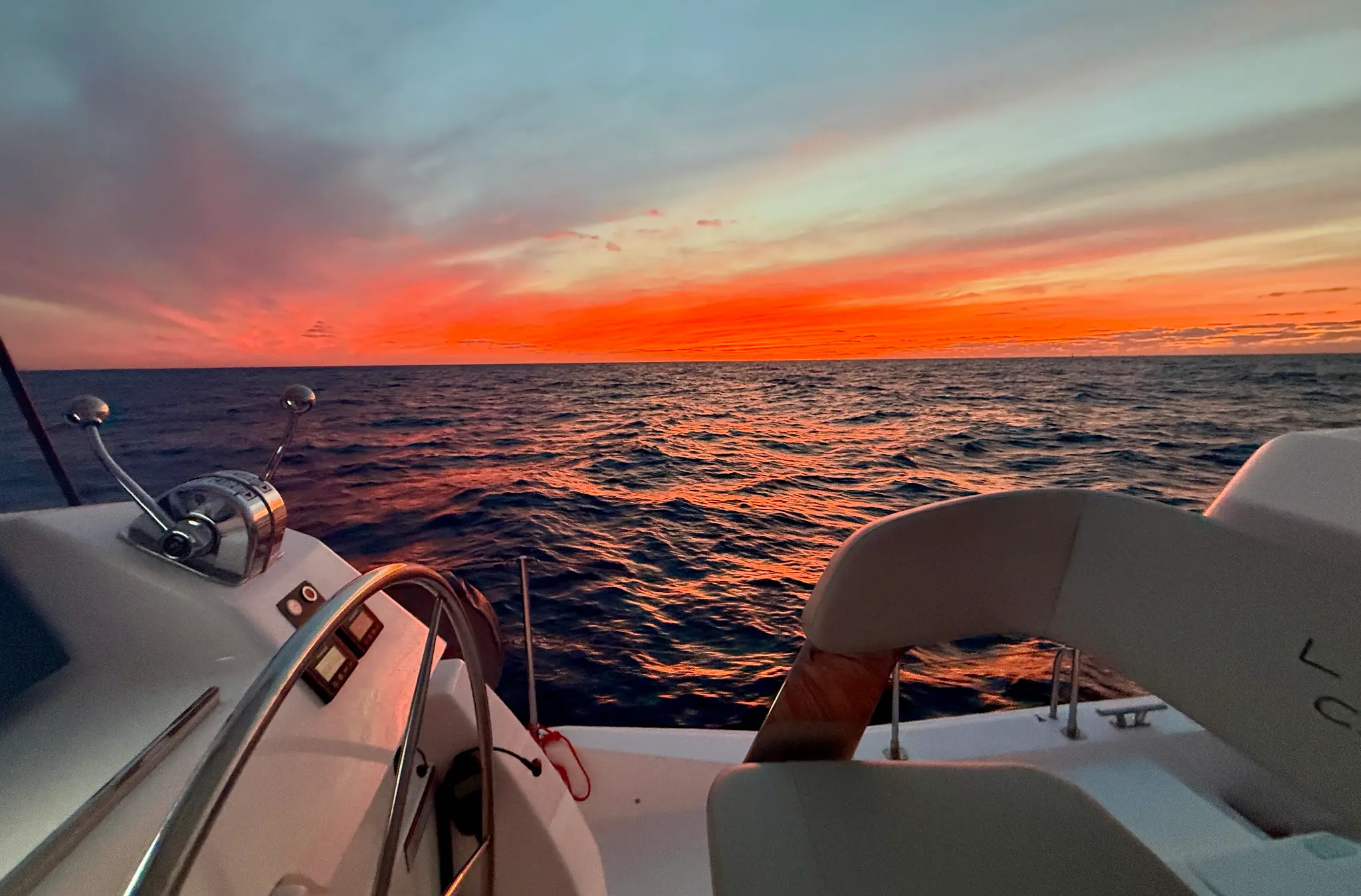
After those four days, everything changed. The seas settled down, and the rest of the trip was amazing—even if the wind couldn't make up its mind. It would fill in, die off, then fill in again, so we did a lot of motor sailing to keep our pace up.
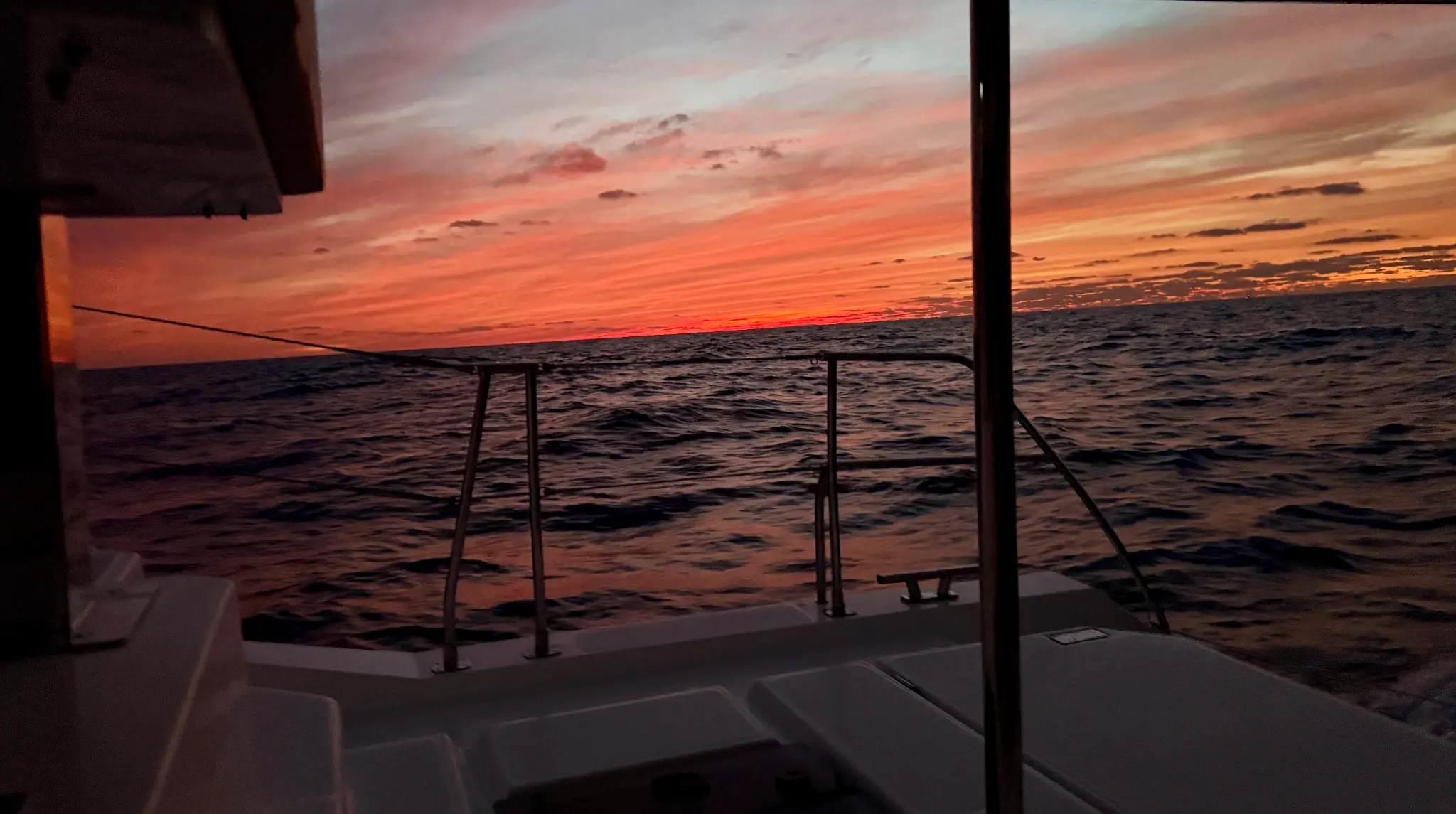
That's real delivery life. You have a schedule and a weather window, and the engines help you work with both. There were still great stretches under sail, and night watches under more stars than I could count. Once things calmed down, I could finally sit there and take it all in.
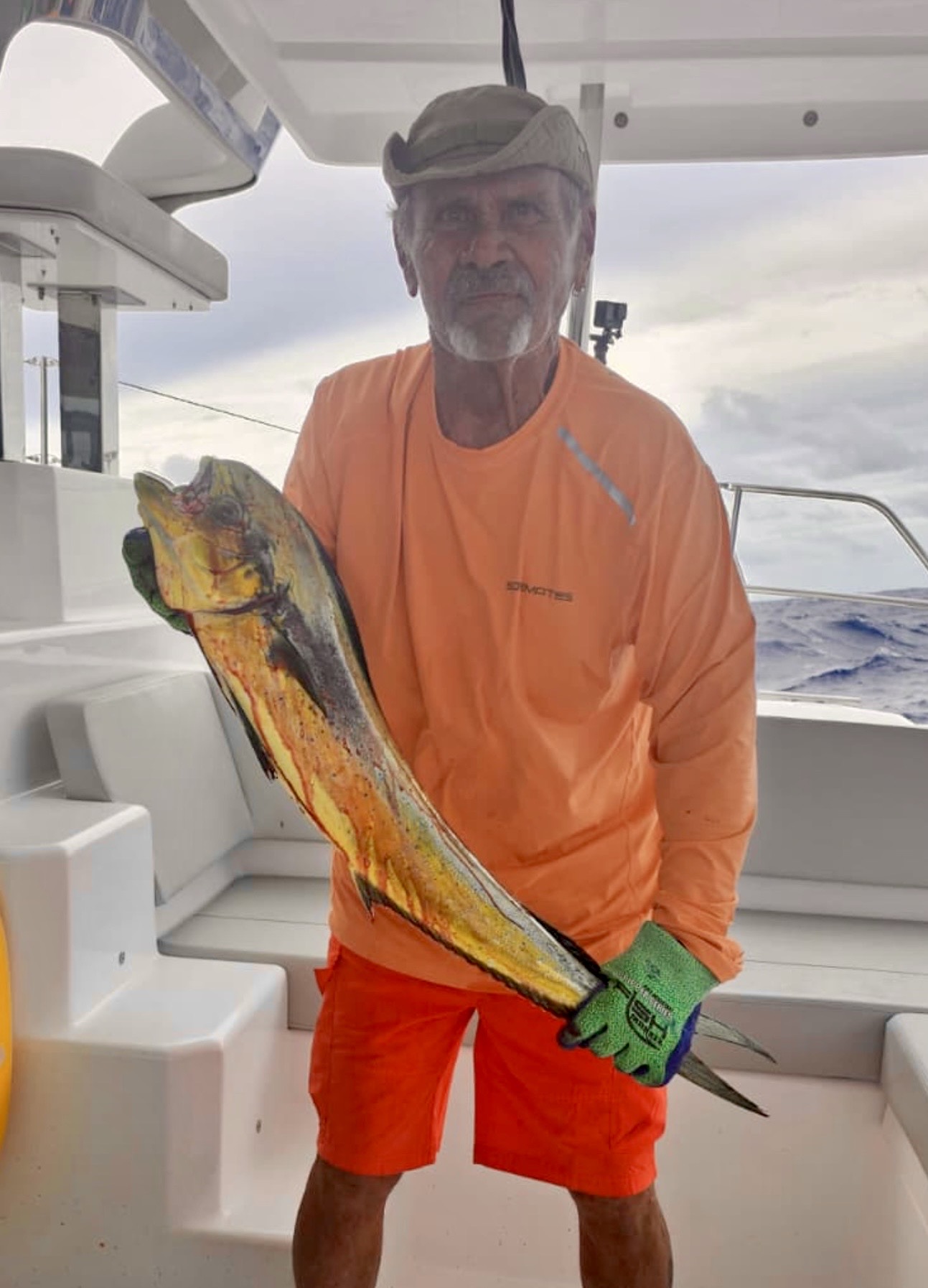
We also caught a couple of mahi. I'm not usually a big seafood guy, but fresh from the sea and on the dinner table a few hours later, they were great. Hard to complain about dinner when it was swimming beside the boat earlier that day.
From Cold Nights to Chasing a Breeze
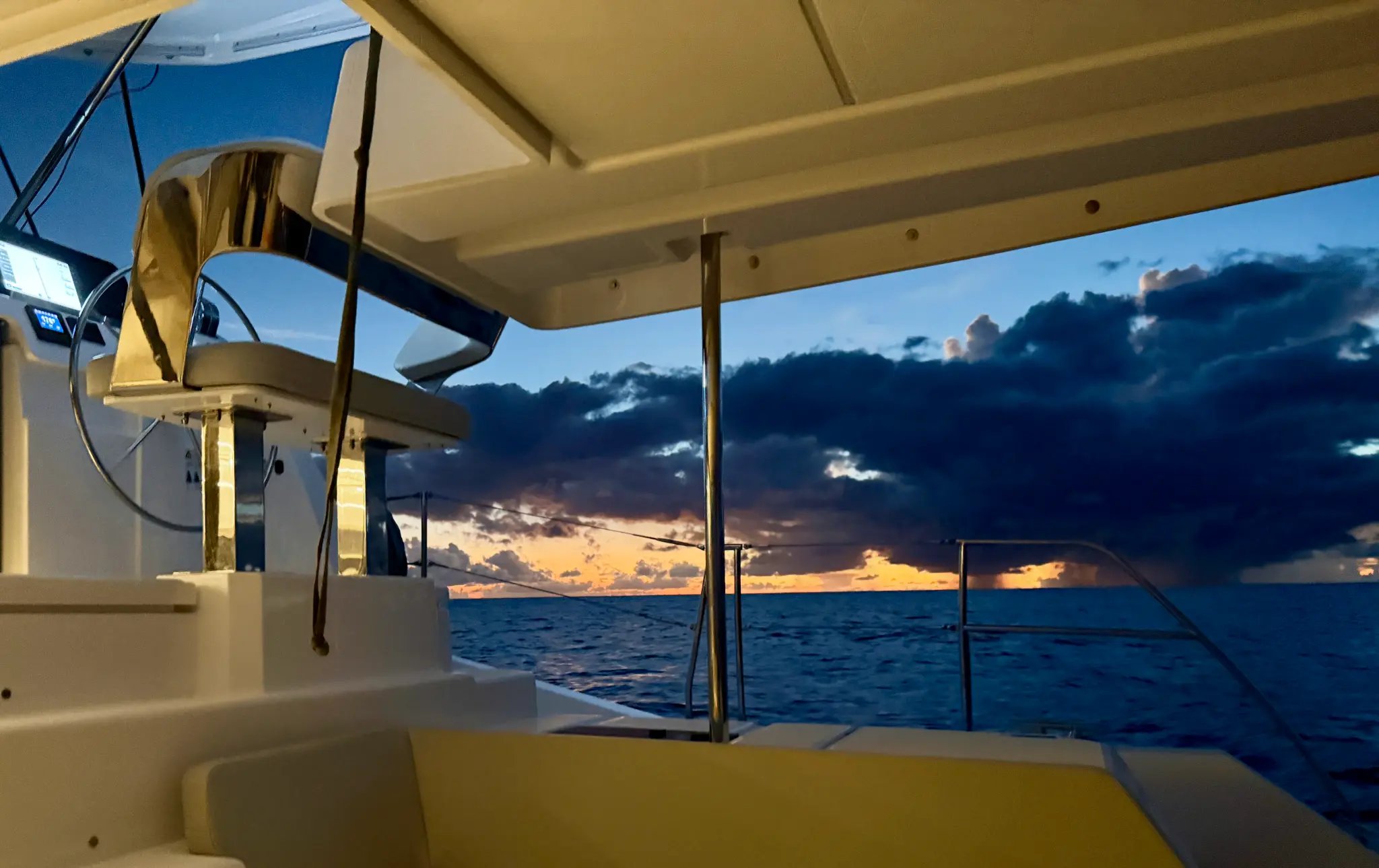
The temperature change along the way was something else. Those first days out of Norfolk were cold and rough. By the time we got south of Bermuda, it felt like a different trip—warm air, hot cabins, and a whole lot less reason to bundle up.
I was back to sleeping in the cockpit and saloon, this time chasing a breeze instead of hiding from the motion. Same boat, same places to sleep, completely different reason for being there.
The generator was out, so AC wasn't an option. We found the breeze and went with it. #sailife
Landfall: Spanish Town, Then The Moorings in Tortola
On November 3, we pulled into Spanish Town on Virgin Gorda at 07:30. We tied up and had an hour to drink coffee and look at green hills for the first time in more than a week. That morning, we checked in with Customs and Immigration at 08:30.
For anyone planning a passage, the BVI's official arriving-by-sea guidance lists St. Thomas Bay on Virgin Gorda as a port of entry. Confirm the current clearance arrangements and hours before you go. That's St. Thomas Bay in the BVI, not St. Thomas in the US Virgin Islands.
Then we ran across to Tortola and brought her into The Moorings base at Wickhams Cay II in Road Town. Lines on. Engines off. Then the docking beers.
After nine days offshore, nothing had ever tasted better.
Thank You, Captain Ron
None of this happens without a good captain, and Captain Ron was amazing.
He was patient and calm when things got rough, and he was always willing to answer questions—even the same one twice at 3 a.m. I learned more about passage-making, weather, and running a big cat offshore from him than I could have from any book.
If you ever get the chance to crew for a captain like that, take it.
Thank You, David
This trip wouldn't have happened without my crewmate David Huval. He introduced me to Captain Ron and recommended me for the delivery, and he was a great shipmate all the way to Tortola.
David is also a professional photographer. Go check out his work at Roam & Focus. Thanks, David—for the introduction, the good company, and helping make this trip happen.
A Special Thank-You to the Galley
I want to give a special thank-you to Captain Ron's better half, Kathryn.
Kathryn wasn't on the passage, but she pre-made every dinner for the trip, and Captain Ron brought them aboard. These weren't just meals. They were really good, home-cooked food, ready to heat up on a boat that, for the first four days, wouldn't hold still.
Anyone who's tried to cook in a rough sea knows how much that meant. Those dinners kept the crew going and turned long days into something to look forward to. Thank you, Kathryn. We ate like kings the whole way down, and every one of us noticed.
Coming Soon: Captain Ron's Top 5
Captain Ron shared a lot of wisdom on this trip, and we caught some of it on camera. Captain Ron's Top 5 is coming soon. Follow along on our YouTube channel, Instagram, or X for the video and more from the trip.
Fair winds. See you out there.
Want to check out the gear we use for our adventures and videos? You’ll find it in the Gear We Use section of our shop.
Gear We Use →