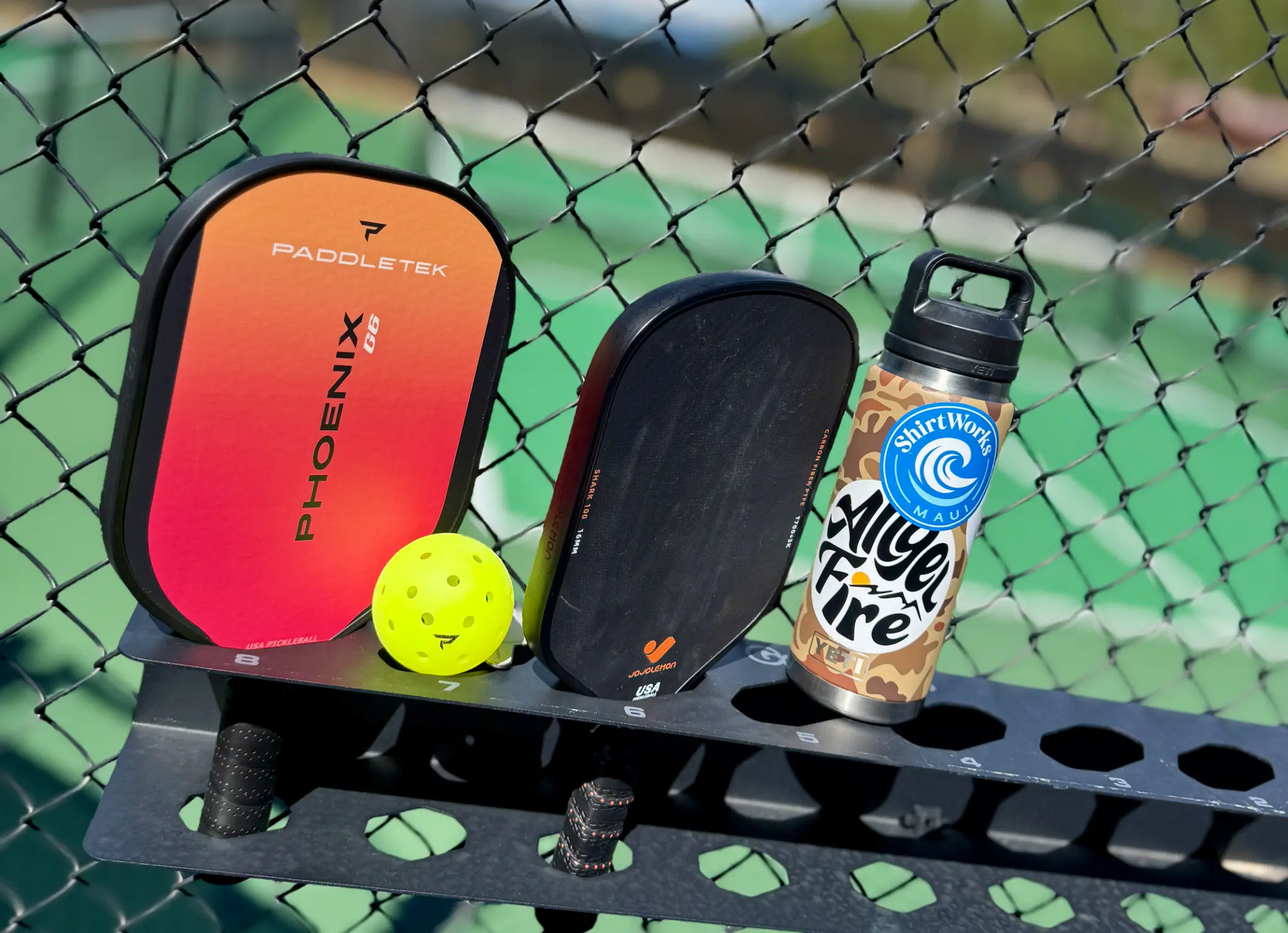
The cheap set got us playing. Once we knew pickleball was sticking around, we moved through the Paddletek Phoenix G6 and into two JOJOLEMON carbon paddles. Here is the honest breakdown from a family that plays for fun, misses plenty, and can finally feel the difference.
The cheap set did its job. It got us on the court and told us we actually liked pickleball. After a couple of years — and after borrowing other people's paddles — the difference became too obvious to ignore. Bigger sweet spot, easier on the arm, and the ball stayed on the face long enough to do something with it. We are not great at pickleball. We just play enough that those starter paddles stopped being fine.
Paddletek Phoenix G6: The First Real Upgrade
The Phoenix G6 set was the right first move for us. The set in the Amazon link below comes with two paddles and two outdoor balls, so nobody is sharing a paddle or showing up empty-handed. Paddletek lists the G6 as a standard 16-by-8-inch shape with a 14.3 mm PolyCore, a 5-inch handle, and a 7.7-to-8.1-ounce weight range. Its PolyCore and embedded graphite layer are built to dampen vibration and sound, which lines up with what we felt: it is lighter, more forgiving, and a whole lot friendlier on an off-center hit than the cheap set was.
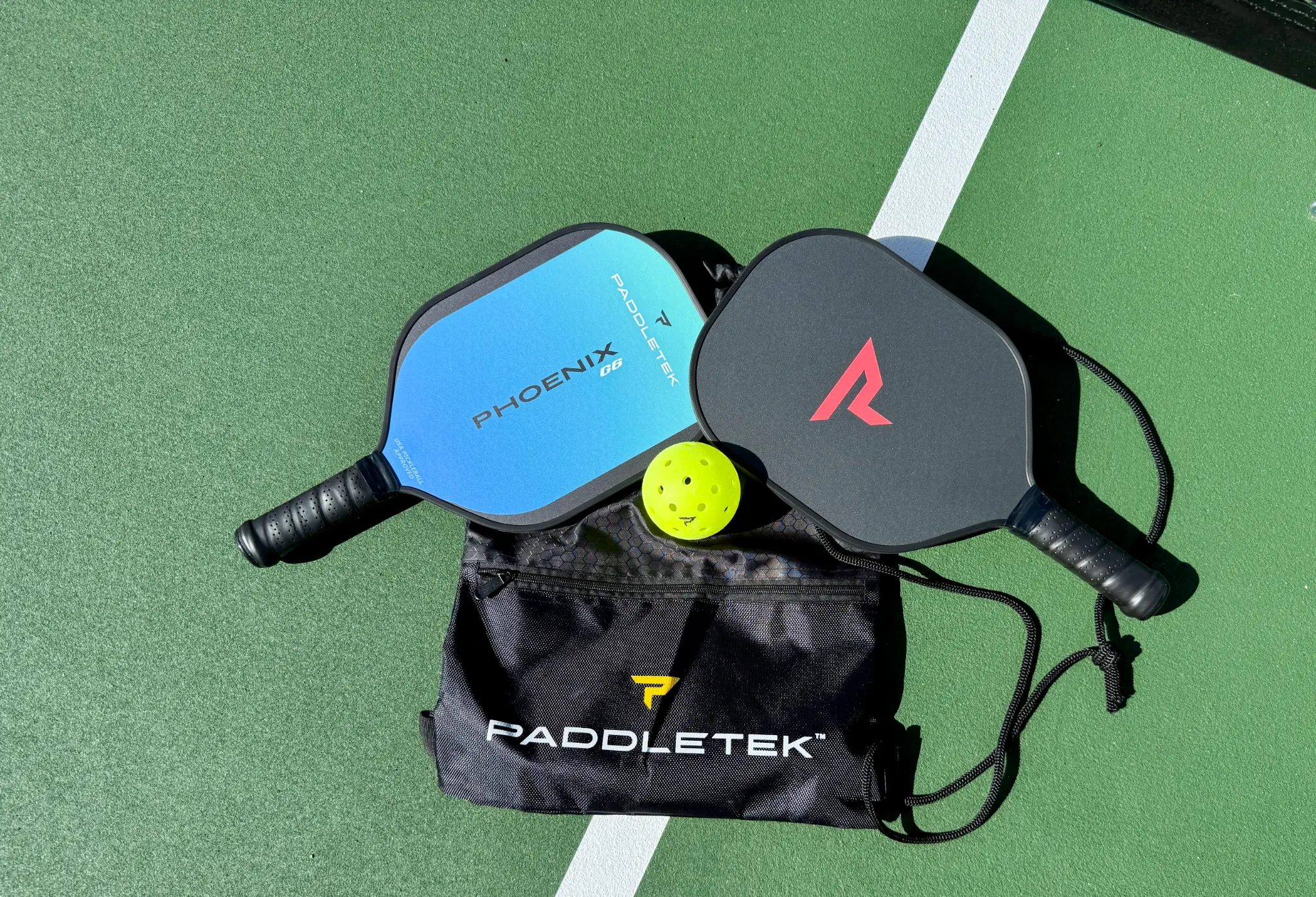
Drives are fine. The G6 is not trying to be a rocket, and that is not a knock on it. It is an easy paddle to learn with, use with guests, or hand to somebody who is still figuring out the kitchen. The smooth composite face is where we eventually felt the ceiling: you can slice the ball, but it does not grab it the same way a textured raw-carbon face does. The 5-inch handle also runs out of room if you like a two-handed backhand.
The Carbon Upgrade Is the Part You Cannot Unfeel
Once we knew pickleball was staying in the rotation, the carbon paddles were the real upgrade. The first thing you notice is spin. A soft shot sits on the face just long enough to place it instead of simply blocking it back. Dinks get easier, and you can still put some pace on a drive without swinging out of your shoes. That does not turn us into tournament players. It just makes the ball do more of what we meant for it to do.
JOJOLEMON Shark 100: Long Handle for the Two-Hander
The Shark 100 is the longer-handle option in our bag. JOJOLEMON lists it with a 3K raw Toray T700SC carbon-fiber face, a 16 mm polymer honeycomb core, and an 8-ounce weight. The extended handle is the whole reason to look at it if somebody in the family hits a two-handed backhand. It gives that player actual room to work instead of asking them to hold half the grip. The 16 mm core also has a more muted, comfortable feel when a mishit shows up — which it still does around here.
JOJOLEMON 16 mm Standard: Quicker for the One-Hander
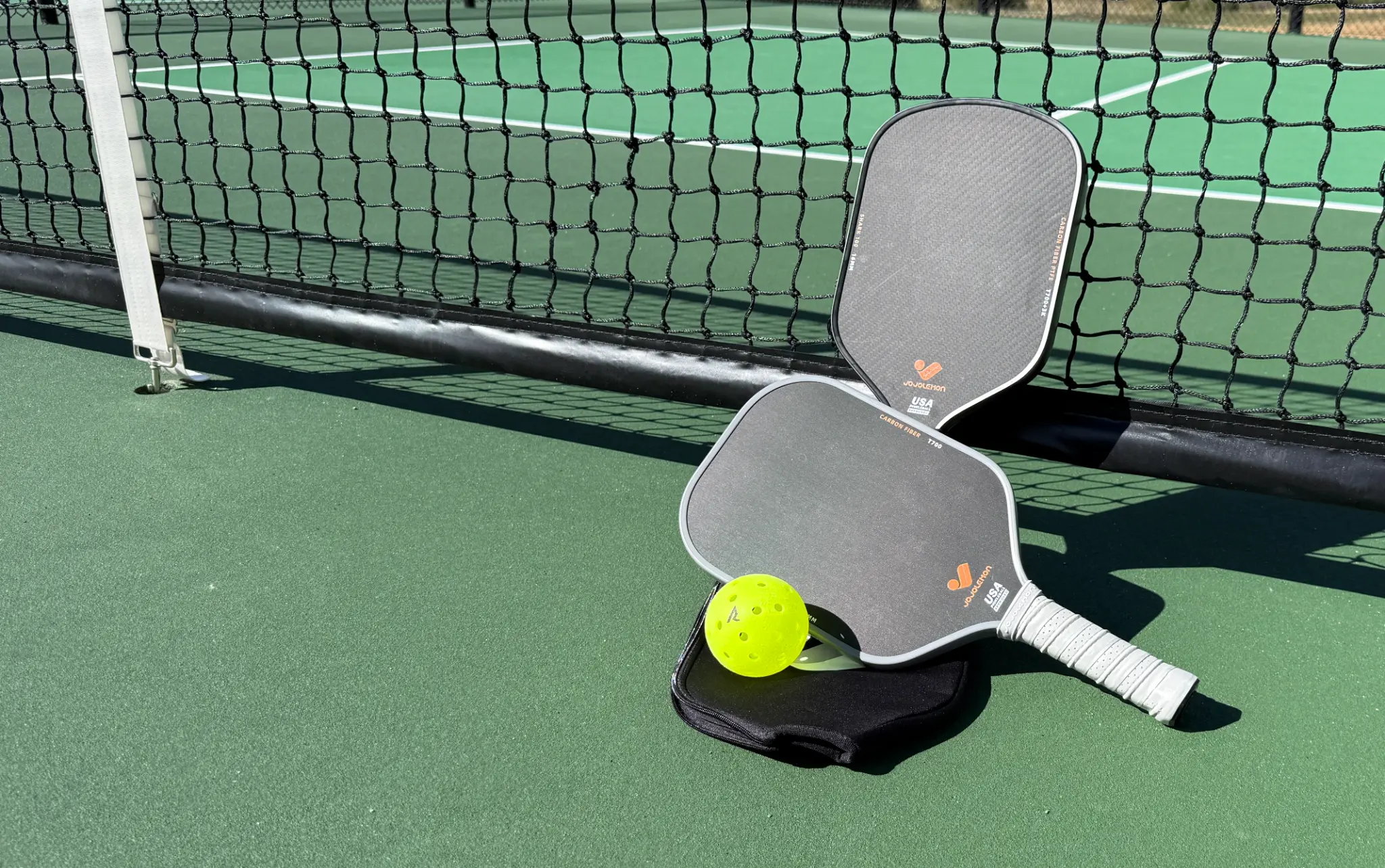
The shorter, standard-handle JOJOLEMON is the one I grab when I am playing one-handed and want the paddle to feel a little quicker. The Amazon listing for the version linked below calls out a 3K raw-carbon face, a 16 mm polymer core, foam edges, and an 8-ounce weight. On court it feels like the Shark's sibling: same kind of spin advantage and soft touch, without the extra handle length. That makes the choice simple in our house — longer handle to the two-hander, standard handle to the one-hander.
JOJOLEMON is a paddle company that sells both direct and on Amazon; it is not an Amazon brand. Prices move around, and Amazon seller names can differ from the brand name, so check the seller, current return policy, and exact model before you buy. Similar-looking paddles can be cheaper without the approval status or warranty you expect.
What We Would Actually Tell a Friend
- —Still deciding whether you even like pickleball? Start with the Paddletek Phoenix G6 two-pack and get on the court.
- —Already know you are going to keep playing? Skip straight to a textured carbon paddle. The spin is the difference you notice first.
- —Use the extended-handle Shark 100 style if you hit a two-handed backhand and want the extra grip room.
- —Use the standard-handle JOJOLEMON if you play one-handed and prefer a slightly quicker feel.
- —Before an event, confirm the exact paddle and variation against the current USA Pickleball approved-paddle list.
Official dimensions, weight range, core thickness, and current direct price for the Phoenix G6.
Official construction, extended-handle details, warranty information, and current direct price for the Shark 100.
Check the current approved-paddle list for the exact model and variation before tournament play.
Bottom Line
The G6 set is what we should have bought at the end of year one. It is enough to learn on and it makes an easy guest set. Once we knew we were going to keep playing, the two carbon paddles were the real upgrade. We are keeping the old cheap set in the garage, but the Paddleteks and JOJOLEMONs are the paddles that make it into the truck when we are headed to the court.
Our Picks
Paddletek Phoenix G6 Two-Paddle Set
Check today's priceThe first upgrade that got us out of the starter-paddle rut. The linked set includes two Phoenix G6 paddles and two outdoor balls. Paddletek lists a 14.3 mm core, 7.7–8.1 oz weight range, and 5-inch handle; the Amazon listing describes the set as USAPA approved.
Pros
- ✓Two paddles plus two outdoor balls in the linked set
- ✓Large, forgiving sweet spot for players stepping up from a cheap set
- ✓Vibration-damping PolyCore and embedded graphite layer
- ✓Good 5-inch handle for a normal one-handed grip
- ✓Easy paddle to lend to guests or newer players
Cons
- ✗Smooth face does not create the same spin as raw carbon
- ✗5-inch handle is short for some two-handed backhands
- ✗A capable first upgrade, but not the one we would buy after committing to the sport
Affiliate link — we may earn a small commission
JOJOLEMON 16 mm Raw Carbon Paddle
Check today's priceThe shorter, standard-handle carbon option we use for a quicker one-handed feel. The linked Amazon listing specifies a 3K raw-carbon face, 16 mm polymer core, foam edges, 8-ounce weight, and USA Pickleball approval claim. Confirm the exact listing, seller, return terms, and current approval status before ordering.
Pros
- ✓Raw-carbon face adds the spin we missed on the smooth G6
- ✓16 mm core has a more muted, arm-friendly feel for us
- ✓Standard handle feels quick for one-handed players
- ✓Noticeably easier to place dinks and add shape to a drive
- ✓Amazon listing includes a return policy at the time of our review
Cons
- ✗Long-handle Shark 100 is better for a two-handed backhand
- ✗Price varies enough that it is worth checking before buying
- ✗Confirm the current seller, exact model, and approval status at checkout
Affiliate link — we may earn a small commission